#1 Why Builders Should Never Design (and Designers Should Never Build)
Builders build. Designers design. Confuse the two, and you’ll end up with beige chaos and an empty wallet.


Darlings, let’s talk about a silent epidemic ruining homes everywhere — the myth of the “builder who designs.”
I’ve walked into too many kitchens that feel like crime scenes of good taste: wrong proportions, awkward bench heights, downlights blazing like an interrogation room.
The homeowners? Lovely. Enthusiastic. Misled. Because someone convinced them that the builder could “handle the design.”
Spoiler: that’s like asking your GP to perform a nose job. Similar field, vastly different result.
Builders and designers are partners, not substitutes. Both vital. Both skilled. But when you expect one to do the other’s job, the project suffers — and so do you. Let’s unravel this, shall we?

1. The “Design & Construct” Mirage
“Design and construct” sounds efficient, doesn’t it? Streamlined, one point of contact, fewer headaches. Except it often means design is an afterthought, squeezed between quoting and construction.
When a builder designs, they design for construction ease — not aesthetics, flow, or soul. You’ll get functional, yes. Fabulous? Rarely.
A true designer works from the inside out — thinking about how you live, how light hits your walls, how your morning coffee feels in the space. Builders work from the outside in — structure, sequence, compliance. Both are essential. But they’re different art forms.
If your design comes as a bonus from a builder’s “package deal,” you’re not saving money. You’re cutting out the only person who ensures your home looks intentional, not accidental.
2. Why Builders Aren’t Trained in Aesthetics
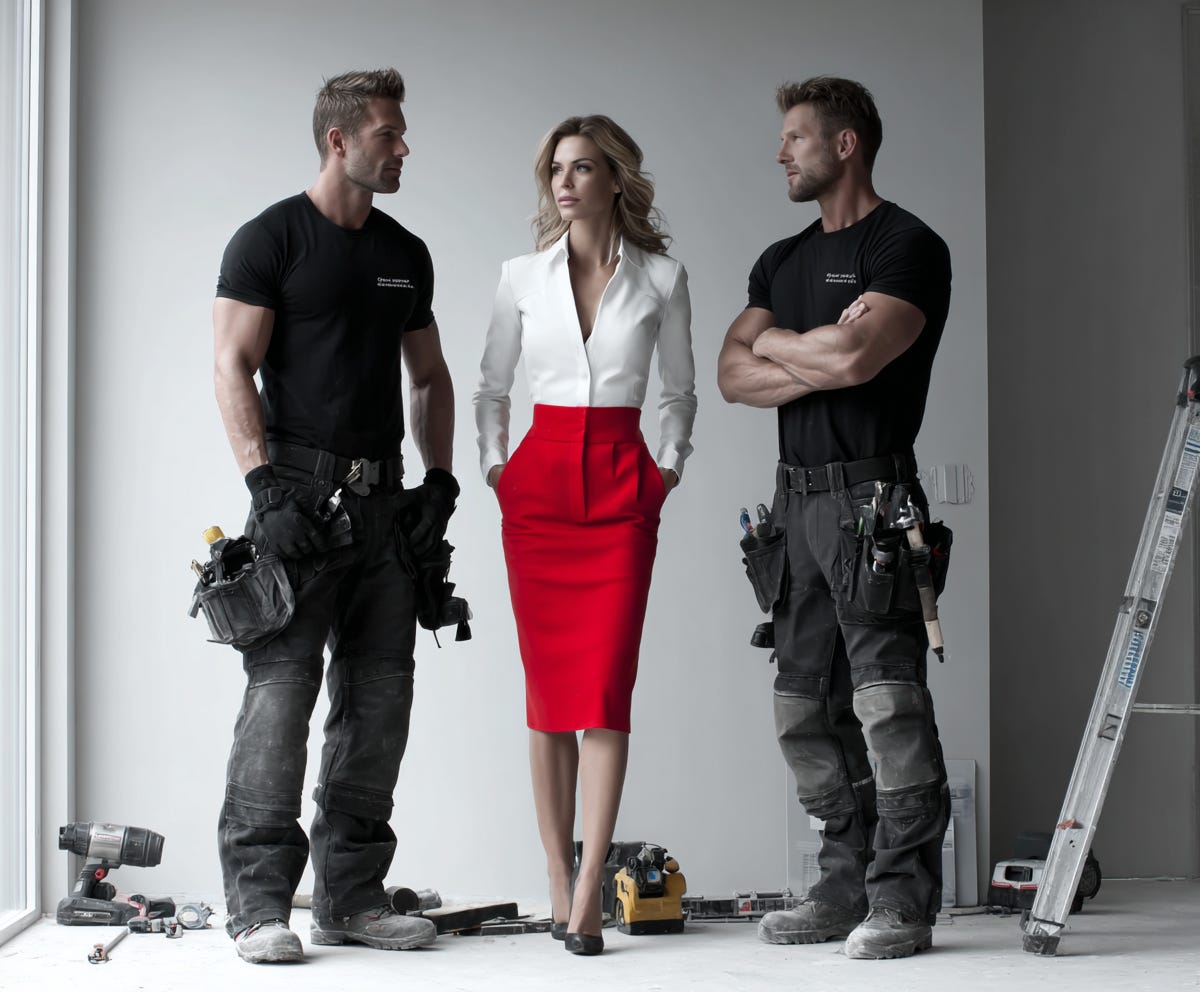
Let’s be clear: builders are extraordinary professionals. They understand physics, materials, timelines, and budgets better than anyone. They make drawings become real. But their training is in construction, not composition.
They know how to build a wall — not whether that wall should exist. They know how to install lighting — not how it affects your mood. They can make cabinetry level, but not necessarily beautiful.
That’s not a criticism. It’s a division of genius.
Designers study proportion, psychology, ergonomics, and spatial choreography. We’re trained to create homes that make your heart flutter and function perfectly. Builders execute that vision to perfection. The magic happens when both collaborate — not when one tries to be both.
3. The False Economy of Skipping Design
Ah, the seductive idea that “we’ll save money by skipping a designer.” I hear it constantly — right before the same clients call me mid-reno, saying, “It doesn’t look how I imagined.”
Of course it doesn’t.
Without a designer, you’re missing:
Detailed documentation — the kind builders need to quote accurately.
Design foresight — how materials, light, and layout affect each other.
Budget control — because nothing costs more than changing your mind mid-build.
Every on-site “Can we just move that wall?” moment costs 10x more than it would during design.
Every “I thought that would be bigger” comes from skipping spatial planning.
Every “We’ll just pick the tiles later” ends with regret in the grout lines.
You’re not saving by omitting a designer. You’re deferring disaster.

4. Builders Build From Plans. Designers Create Them.
Here’s the elegant truth: builders are executors of precision. Designers are creators of possibility.
A builder reads a drawing and calculates logistics.
A designer writes that drawing, ensuring the layout works, the lighting flatters, the flow feels human, and the finishes align with your vision and lifestyle.
Imagine baking a cake without a recipe — just vibes. That’s a renovation without design documentation. Everyone’s guessing: builder, tiler, electrician, painter. Guesswork doesn’t create luxury. It creates chaos.

5. Design Is Emotional Engineering
Design isn’t fluff. It’s functional psychology.
It’s why you feel calm in one space and restless in another. It’s how you maximise storage, avoid weird corners, and make your home sing with light and proportion.
Your builder ensures that your home stands up.
Your designer ensures that your home stands out.
And together? That’s when you get magic. The kind of spaces that feel inevitable — as though they always existed that way.

6. The Timeline Trap
Homeowners often fear that hiring a designer will slow things down. In truth, it does the opposite.
When design leads, your builder receives precise plans and clear specifications. There’s no guesswork, no confusion, no site delays while everyone debates where the pendant should go.
Every minute spent planning saves days on-site. Every drawing prevents five phone calls. Every decision made early keeps costs steady.
Design-led projects don’t take longer — they just take smarter.

7. Builders Love Working With Designers (Even if They Pretend Otherwise)
Here’s a secret: good builders adore good designers.
”We make their lives easier. We pre-empt questions. We resolve conflicts on paper instead of on scaffolding”. Penelope Herbert
A builder with a designer on board isn’t burdened — they’re empowered. They can quote faster, build cleaner, and showcase their craftsmanship on a space that actually deserves it.
When a builder complains about “designers making things complicated,” it’s often because they’ve only worked with amateurs. A professional designer like Plush Design Interiors? We make sure everyone shines.
8. How to Tell If You’re Doing It Wrong
If any of these sound familiar, you’re building backwards:
You’ve hired a builder but don’t have drawings.
You’ve chosen tiles, benchtops, and lights without a floor plan.
You’re picking wall colours on-site.
Your builder says “we’ll work that out later.”
You’re awake at 3am googling “how high should kitchen pendants hang.”
Sweetheart, stop. You need design leadership — now.

9. The Fix: Design First, Build Second
Here’s the renovation sequence that never fails:
Hire your designer.
Develop your concept and drawings.
Approve materials, selections, and colours.
Get accurate quotes based on detailed documentation.
Bring in the builder to execute beautifully.
It’s not glamorous, but it’s foolproof. Your builder should thank you for it.

10. When You Get It Right
When design leads, the builder builds with clarity. The trades know their placement. The finishes arrive in sequence. The budget behaves. And you? You get to enjoy the process — not just survive it.
Design first is not about ego. It’s about excellence.
And nothing says “I’ve got this” like a home that feels deliberate, layered, and alive.

Design First, Build Beautifully
If you’re dreaming of a renovation that looks designed — not assembled — start with us.
At Plush Design Interiors, we don’t just decorate. We orchestrate. We plan, design, and prepare every inch of your home before a single tradie arrives.
Book your design consultation today and see what’s possible when brilliance leads the build.
Did You Know?
In ancient Greece, architects were called architektons — “masters of creation.” They drew plans in sand before anyone picked up a hammer. Builders waited for the design, never the other way around. Even then, they knew: you can’t construct what hasn’t been imagined.
Imagine…
… a world where builders meditate on moodboards, electricians debate colour psychology, and plumbers ponder “the emotional resonance of brass.” They hold weekly critique sessions on the rhythm of grout lines. Somewhere, in that utopia, the paint is perfect — but the world has lost all tension. Let’s keep our lanes, darling. The friction makes the beauty.
Next in the Series:
Part 2: “How to Ruin Your Renovation Before It Even Starts.”
Because if you think hiring a builder first is “getting ahead,” you’re already three steps behind.
Please join me on this delicious and informative three part journey.
Love, Penelope xx
Don’t Get Ripped Off By Your Reno
My latest e-book, “Don’t Get Ripped Off By Your Reno” is available now! Before you spend your hard-earned cash, get the handbook.
Your renovation is a complex system of people, money, and materials. This guide is the operating manual. It’s a small investment that protects your much larger one, giving you the clarity and tools to navigate every stage with authority.